Physiologic Monitoring
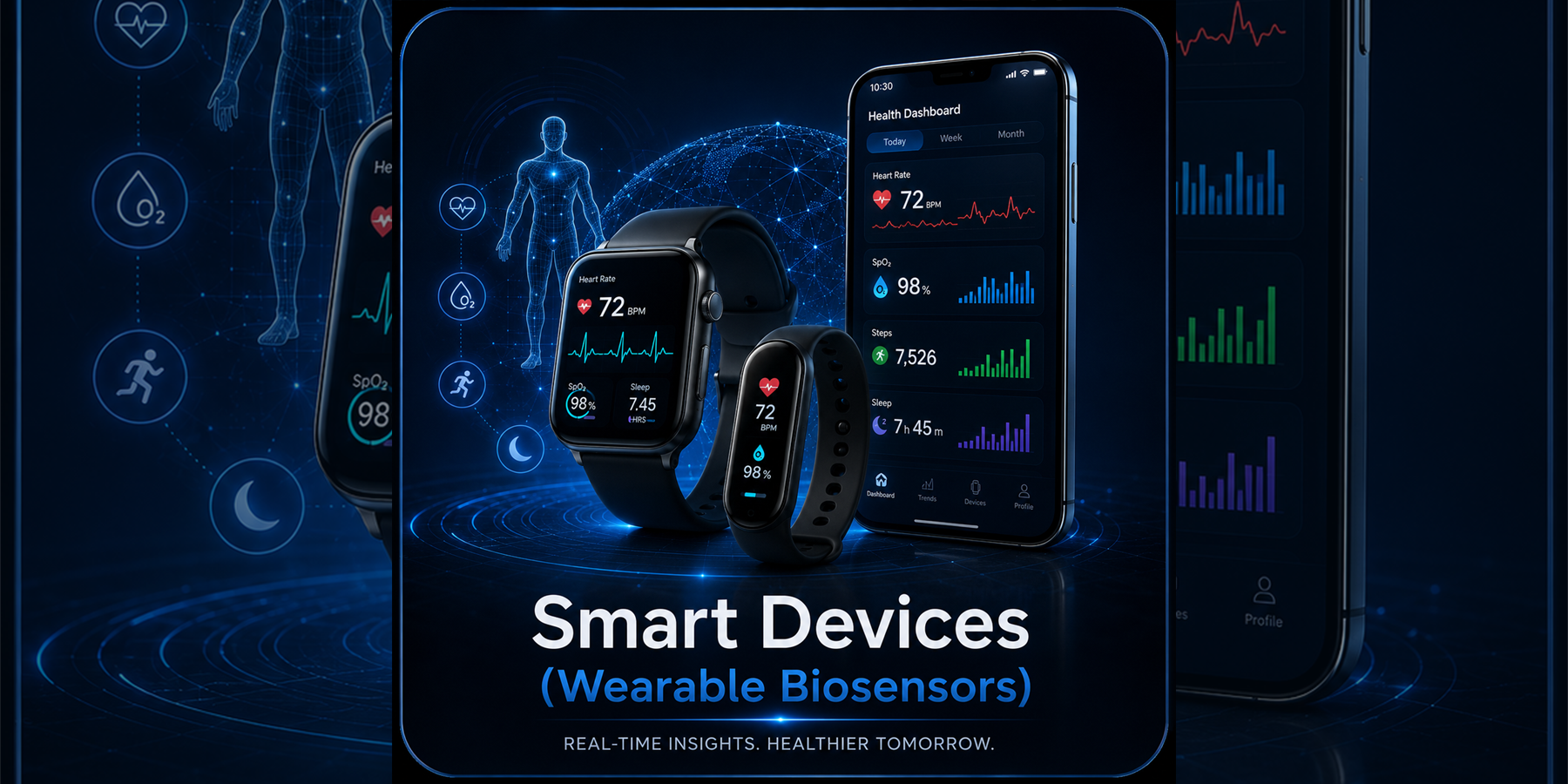
Wearables capture cardiovascular, metabolic, respiratory, sleep, activity, temperature, and stress-related signals.
Continuous Digital Biomarkers
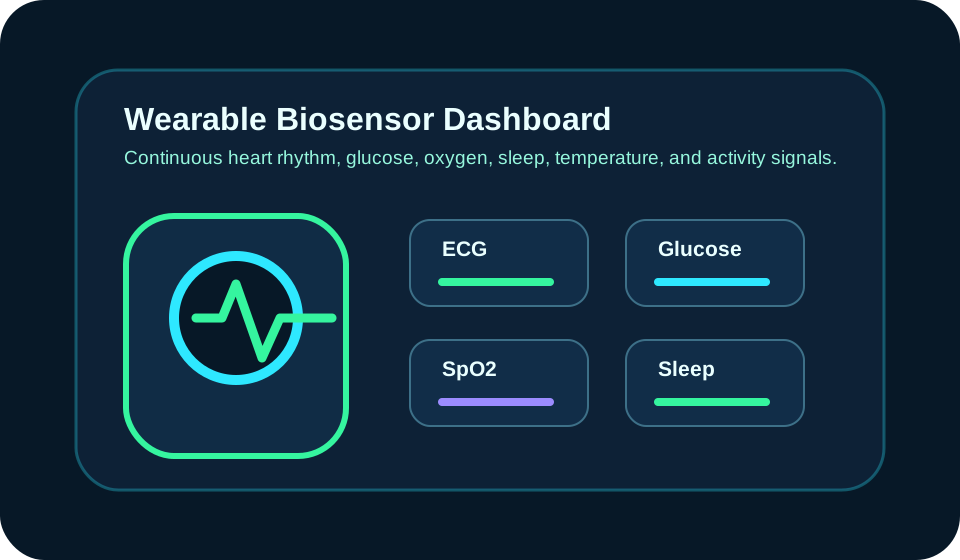
Connected sensors that measure physiologic signals such as heart rhythm, glucose, oxygen saturation, temperature, sleep, movement, and stress patterns to support remote monitoring and precision care.
Abstract
Wearable biosensors extend care beyond clinic visits by collecting continuous or frequent physiologic measurements. When paired with data quality controls, clinical interpretation, and care workflows, these signals can support prevention, earlier intervention, chronic disease management, and patient engagement.
Wearables capture cardiovascular, metabolic, respiratory, sleep, activity, temperature, and stress-related signals.
Validated sensor patterns can become measurable markers of disease risk, treatment response, and functional status.
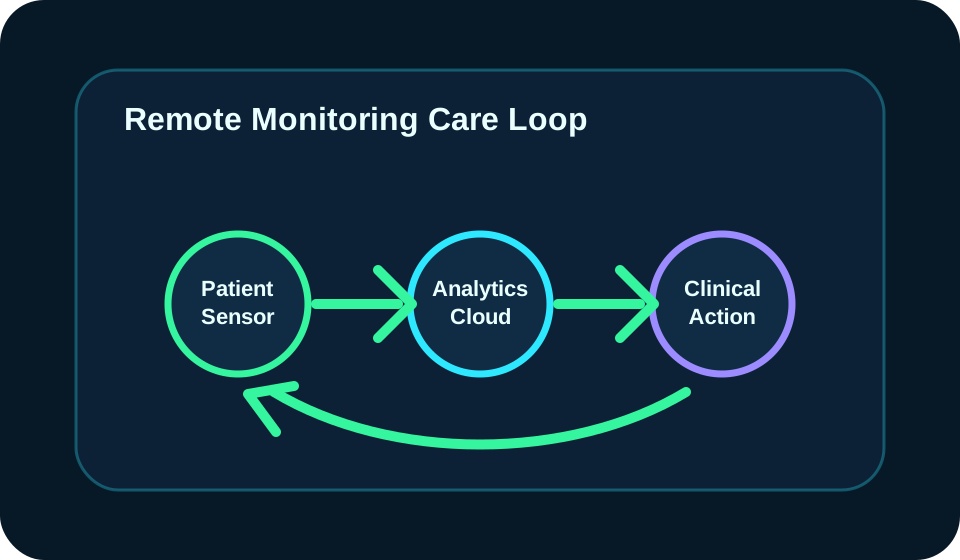
Connected devices can trigger outreach, medication adjustment, coaching, and follow-up when clinical thresholds are met.
Parts I-II
Smart health devices combine sensors, signal processing, connectivity, user interfaces, analytics, and clinical protocols.
Photoplethysmography estimates pulse, heart rate variability, oxygen saturation, and vascular patterns.
Continuous glucose monitors and emerging chemical sensors measure analytes in interstitial fluid or sweat.
Accelerometers and gyroscopes measure activity, gait, tremor, sleep movement, and fall risk.
Part III
Wearable biosensors translate physiologic activity into measurable signals that require validation before clinical use.
Wearables can capture heart rate, rhythm irregularity, heart rate variability, pulse waveform, and blood pressure estimates.
Continuous glucose monitoring reveals post-meal response, hypoglycemia risk, time in range, and treatment patterns.
Oxygen saturation, respiratory rate, sleep breathing patterns, and exertional response can support monitoring.
Sleep duration, activity, gait, exertion, temperature, and recovery signals can support longitudinal care.
Part IV
Wearable biosensor ecosystems include consumer devices, prescribed monitors, implantables, patches, rings, and clinical-grade platforms.
Track pulse, rhythm flags, activity, sleep, temperature trends, and recovery indicators.
Measure interstitial glucose trends for diabetes care, metabolic feedback, and hypoglycemia prevention.
Provide extended ECG, respiratory, temperature, or vital sign monitoring for targeted clinical questions.
Blood pressure cuffs, pulse oximeters, scales, inhaler sensors, and spirometers support home monitoring.
Part V
Wearable biosensor data must be accurate enough, timely enough, and clinically meaningful enough to guide care.
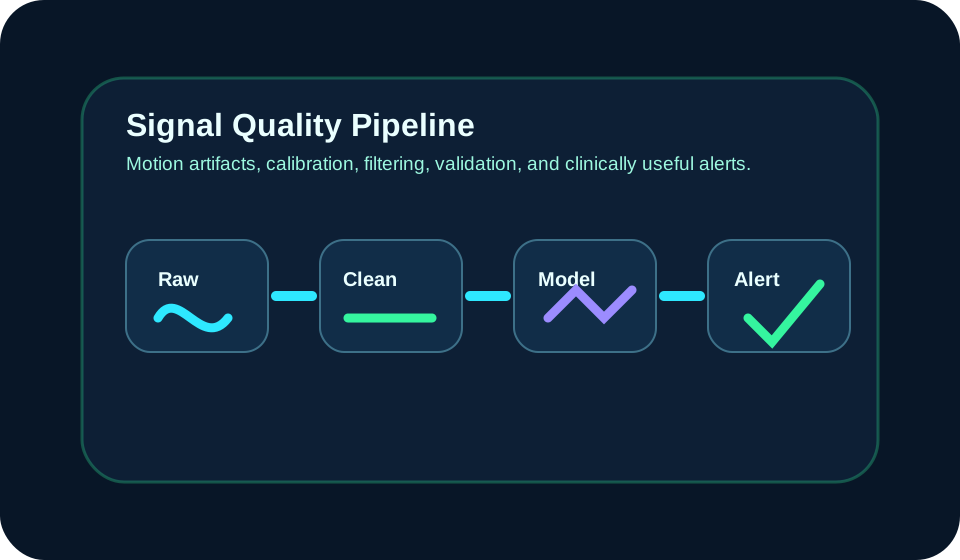
Motion, poor skin contact, low perfusion, sweat, device fit, and environmental conditions can degrade signals.
Some sensors require calibration, reference checks, or periodic confirmation with clinical-grade measurements.
Models should be tested across diverse populations, conditions, skin tones, ages, and clinical contexts.
Thresholds must balance false alarms, missed events, patient anxiety, and clinician workload.
Part VI
Smart devices can support chronic disease care, prevention, rehabilitation, clinical trials, and population health when embedded in care workflows.
Part VII
Smart device adoption must address accuracy, equity, privacy, clinical workload, data ownership, and patient trust.
Continuous health streams can reveal sensitive behavior, location, physiology, and disease patterns.
Cost, broadband, device literacy, disability access, and validation gaps can widen disparities.
Too many alerts and unfiltered streams can burden care teams unless workflows are designed carefully.
Consumer metrics may not equal diagnostic-grade data and must be interpreted in clinical context.
Part VIII
The future of wearable biosensors is multimodal, personalized, predictive, and integrated with care delivery.
Combining optical, electrical, chemical, motion, acoustic, and temperature signals can improve context.
Sweat, saliva, interstitial fluid, and optical methods may expand analyte monitoring beyond glucose.
Models can learn individual baselines and detect meaningful deviation rather than relying only on generic thresholds.
Validated sensors may trigger coaching, medication adjustment, device therapy, or clinician escalation.
Continuous biosensor data can feed patient-specific models of physiology and treatment response.
References
Topol, E. (2019). High-Performance Medicine: The Convergence of Human and Artificial Intelligence. Nature Medicine, 25, 44-56.
Steinhubl, S. R., Muse, E. D., & Topol, E. J. (2015). The Emerging Field of Mobile Health. Science Translational Medicine, 7(283).
Piwek, L., Ellis, D. A., Andrews, S., & Joinson, A. (2016). The Rise of Consumer Health Wearables. PLoS Medicine, 13(2).
Dunn, J., Runge, R., & Snyder, M. (2018). Wearables and the Medical Revolution. Personalized Medicine, 15(5), 429-448.
U.S. Food and Drug Administration. (2025). Digital Health Technologies for Remote Data Acquisition in Clinical Investigations.
World Health Organization. (2021). Global Strategy on Digital Health 2020-2025.
FAQ
Evidence-based answers about wearable biosensors, remote monitoring, signal quality, and clinical use.
Wearable biosensors are body-worn devices that measure physiologic or biochemical signals such as heart rhythm, pulse, glucose, oxygen, movement, sleep, and temperature.
Not by themselves. Wearable signals can support screening or monitoring, but clinical diagnosis usually requires validated devices, context, confirmatory testing, and clinician interpretation.
A digital biomarker is a validated, sensor-derived measurement that reflects a biological, physiological, functional, or behavioral process relevant to health or disease.
Poor fit, motion, skin contact, calibration errors, and environmental noise can create false readings or missed events, so filtering and validation are essential.
They can support earlier detection, chronic disease monitoring, personalized coaching, medication adjustment, remote follow-up, and research endpoints when integrated into clinical workflows.