Personalized Therapy Selection
Therapies are increasingly selected around patient-specific genetics, disease subtype, biomarkers, and metabolic characteristics.
Next-Generation Medicine
Next-generation pharmaceutical solutions optimized for individual patient responses - combining pharmacogenomics, targeted therapies, AI-driven discovery, biologics, and nanomedicine.
Abstract
The pharmaceutical industry is moving beyond broad, one-size-fits-all therapy toward medicines guided by genetic profile, molecular biomarkers, disease mechanisms, and real-time patient data.
Therapies are increasingly selected around patient-specific genetics, disease subtype, biomarkers, and metabolic characteristics.
Pharmacogenomic screening helps identify patients at higher risk for toxicity before medication exposure.
Advanced modalities target specific disease biology with a level of precision not possible with many traditional small molecules.
Targeted drug delivery systems can concentrate treatment in diseased tissue while reducing systemic exposure.
Part I
Precision medicine has transformed pharmaceutical science by emphasizing individualized therapeutic strategies powered by genomics, molecular biology, computational science, and biotechnology.
Part II
Pharmacogenomics studies how genetic variations influence drug metabolism, efficacy, and toxicity - guiding personalized prescribing and dosing strategies.
Variants affect metabolism of many psychiatric, pain, and cardiovascular medications.
Variants influence clopidogrel activation and response to several other medications.
Variants can affect warfarin metabolism and dosing requirements.
Genetic differences influence warfarin sensitivity and bleeding risk.
Testing helps prevent severe myelosuppression from thiopurine therapy.
Genetic variants influence warfarin sensitivity and dosing requirements, making testing important for safe anticoagulation therapy.
Genetic variation can reduce drug activation and limit antiplatelet response.
Targeted cancer drugs are often matched to tumor mutations, receptor status, and companion diagnostics.
Choose the most effective agent for each patient's genetic profile.
Personalize dosing for poor, intermediate, normal, or rapid metabolizer status.
Identify high-risk patients before prescribing potentially harmful drugs.
Forecast therapeutic response before initiating costly or risky treatments.
Part III
Oncology is one of the most advanced applications of precision pharmaceuticals, moving from broad cytotoxic chemotherapy toward molecularly targeted strategies.
Targeted therapies act on cellular pathways or genetic mutations driving tumor growth, selected using molecular diagnostics and tumor genomic profiling.
Immunotherapy enhances the immune system's ability to recognize and destroy cancer cells through checkpoint inhibition, cellular therapy, and targeted antibodies.
Companion diagnostic tests identify patients most likely to benefit from specific therapies by integrating genomic and biomarker data into clinical decisions.
Part IV
Biologics are pharmaceutical products derived from living organisms, targeting specific molecular pathways with a precision unmatched by many traditional small-molecule drugs.
Engineered proteins bind specific antigens involved in disease processes, offering highly targeted treatment for cancer, autoimmune disease, and infectious conditions.
Cancer treatment, autoimmune disease management, infectious disease therapy, and targeted antigen binding.
Gene therapy introduces, replaces, or repairs genetic material to address the underlying cause of inherited or acquired disease.
Viral and nonviral vectors can deliver therapeutic genes for monogenic disease, oncology, and rare disease applications.
RNA medicines use mRNA, siRNA, and antisense approaches to direct protein expression or silence harmful disease pathways.
mRNA vaccines, gene silencing therapies, antisense oligonucleotides, and personalized RNA therapeutics.
Part V
AI is reshaping pharmaceutical research by analyzing large datasets to identify promising drug candidates more efficiently, reducing time and cost across development.
Machine learning can identify hidden biological patterns and disease-driving pathways.
Computational models help predict molecular structure, binding, and biological behavior.
AI narrows large compound libraries to the most promising candidates for laboratory validation.
Predictive models support patient selection, trial design, and monitoring.
Risk models identify potential safety issues earlier in development.
AI can support dynamic dose adjustments using genetics, labs, sensors, and treatment response.
Part VI
Nanotechnology has introduced innovative approaches for targeted drug delivery, improving therapeutic precision and reducing treatment-related side effects.
Nanoparticles deliver drugs directly to diseased tissues while minimizing systemic toxicity.
Lipid nanoparticles protect fragile RNA molecules and facilitate efficient cellular uptake.
Advanced systems respond to physiological signals to release drugs selectively within target tissues.
Part VII
Next-generation pharmaceuticals increasingly function within precision healthcare ecosystems emphasizing prevention, early intervention, and real-time therapeutic adjustment.
Biomarkers help predict disease progression, identify therapeutic targets, monitor response, and adjust therapies dynamically.
Genomic, imaging, laboratory, wearable, and clinical history data support precision prescribing and decision-making.
Digital health technologies enable continuous monitoring of medication response, safety, and early adverse events.
Part VIII
Responsible deployment requires addressing safety, cost, access, privacy, consent, and bias in next-generation pharmaceutical technologies.
Precision therapies require complex manufacturing, genomic testing, regulatory review, and specialized clinical trials.
Sensitive genetic and health data require strong cybersecurity protections and regulatory compliance.
Access can be limited by geography, infrastructure, coverage, and socioeconomic inequality.
Genomic data use raises concerns about discrimination in insurance, employment, and social domains.
AI trained on non-diverse datasets may produce inequitable treatment recommendations.
Patients need meaningful consent around genetic information, ownership, secondary use, and sharing.
Part IX
The future of pharmaceuticals will become increasingly individualized, predictive, and technologically integrated.
Therapies tailored according to genomic profiles, molecular disease signatures, and real-time physiological monitoring.
AI systems accelerate discovery, reduce development costs, and improve therapeutic prediction.
Advanced gene-editing systems may permanently correct inherited diseases through CRISPR and next-generation platforms.
Stem-cell-based and tissue-engineered therapies can restore damaged tissues and organs.
Cancer vaccines and individualized immunotherapies can be customized to tumor genetics and immune profiles.
Wearables, biosensors, AI analytics, and precision prescribing create adaptive, real-time treatment systems.
Scientific References
Ashley, E. A. (2016). Towards Precision Medicine. Nature Reviews Genetics, 17(9), 507-522.
Collins, F. S., & Varmus, H. (2015). A New Initiative on Precision Medicine. New England Journal of Medicine, 372(9), 793-795.
Esteva, A., et al. (2019). A Guide to Deep Learning in Healthcare. Nature Medicine, 25(1), 24-29.
FDA. (2026). Table of Pharmacogenomic Biomarkers in Drug Labeling.
Inglese, J., et al. (2021). Artificial Intelligence in Drug Discovery and Development. Nature Reviews Drug Discovery, 20(5), 353-354.
National Institutes of Health (NIH). (2025). The Promise of Precision Medicine.
Relling, M. V., & Evans, W. E. (2015). Pharmacogenomics in the Clinic. Nature, 526(7573), 343-350.
Topol, E. (2019). High-Performance Medicine: The Convergence of Human and Artificial Intelligence. Nature Medicine, 25(1), 44-56.
Weinshilboum, R., & Wang, L. (2017). Pharmacogenomics: Precision Medicine and Drug Response. Mayo Clinic Proceedings, 92(11), 1711-1722.
Yin, H., et al. (2017). Delivery Technologies for Genome Editing. Nature Reviews Drug Discovery, 16(6), 387-399.
FAQ
Evidence-based answers to common questions on next-generation pharmaceutical medicine.
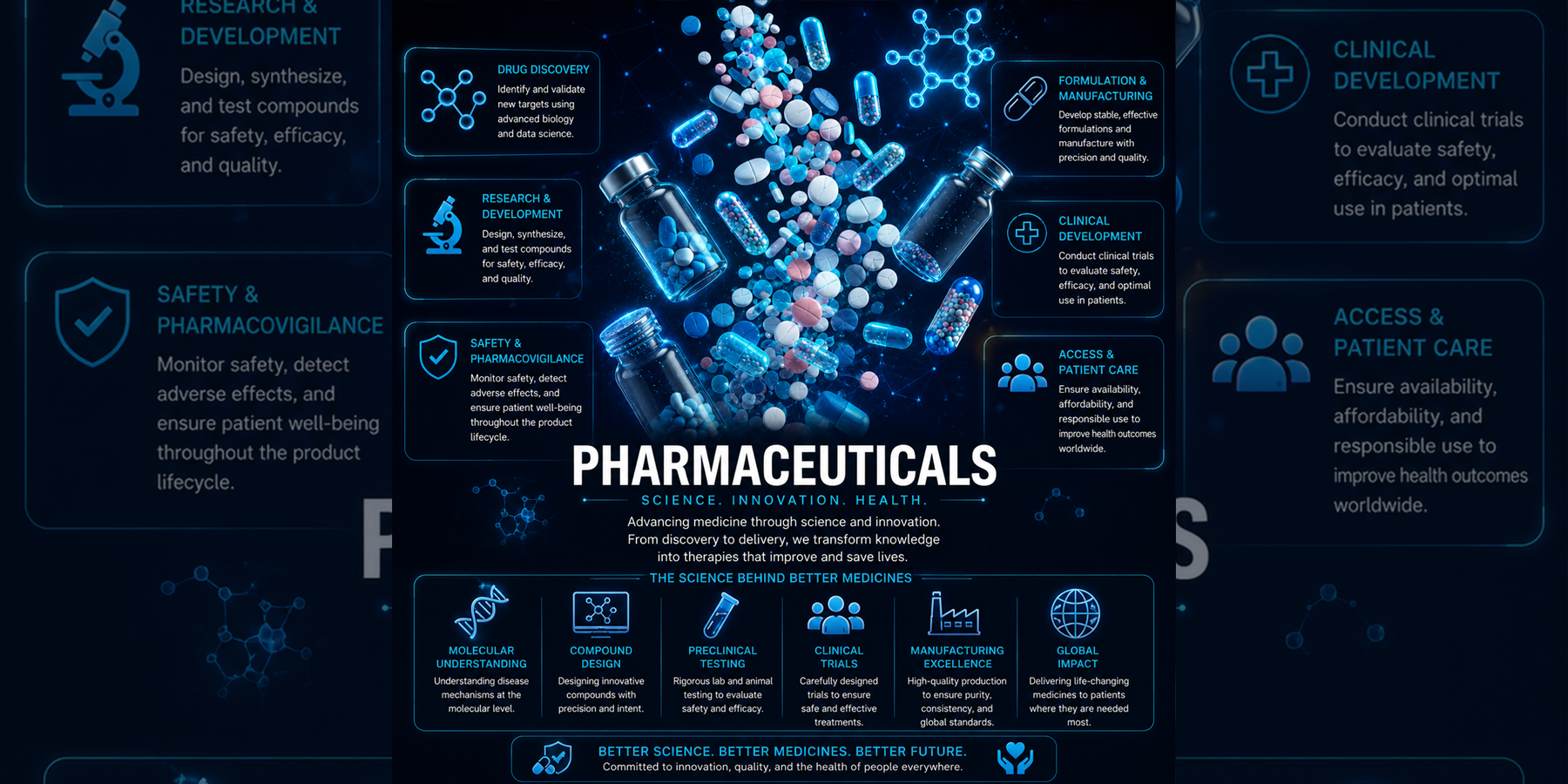
Drug development moves from discovery and preclinical testing into phased clinical trials, regulatory review, approval, manufacturing, and post-market surveillance.
Biologics are produced from living systems and often target specific proteins or pathways, while small molecules are chemically synthesized and usually act through smaller molecular targets.
Nanotechnology uses very small delivery systems such as nanoparticles and lipid carriers to improve targeting, stability, uptake, and controlled drug release.
Genomics helps identify disease drivers, define responder groups, guide trial design, predict toxicity, and match therapies to patient biology.
Key challenges include rising research costs, high clinical trial failure rates, antimicrobial resistance, pricing pressure, regulatory complexity, biosimilar competition, and the need for diverse clinical trial populations.