Pharmaceuticals & Diagnostics
Life-saving drugs, gene therapies, personalized medicine, molecular diagnostics, and advanced biologics.
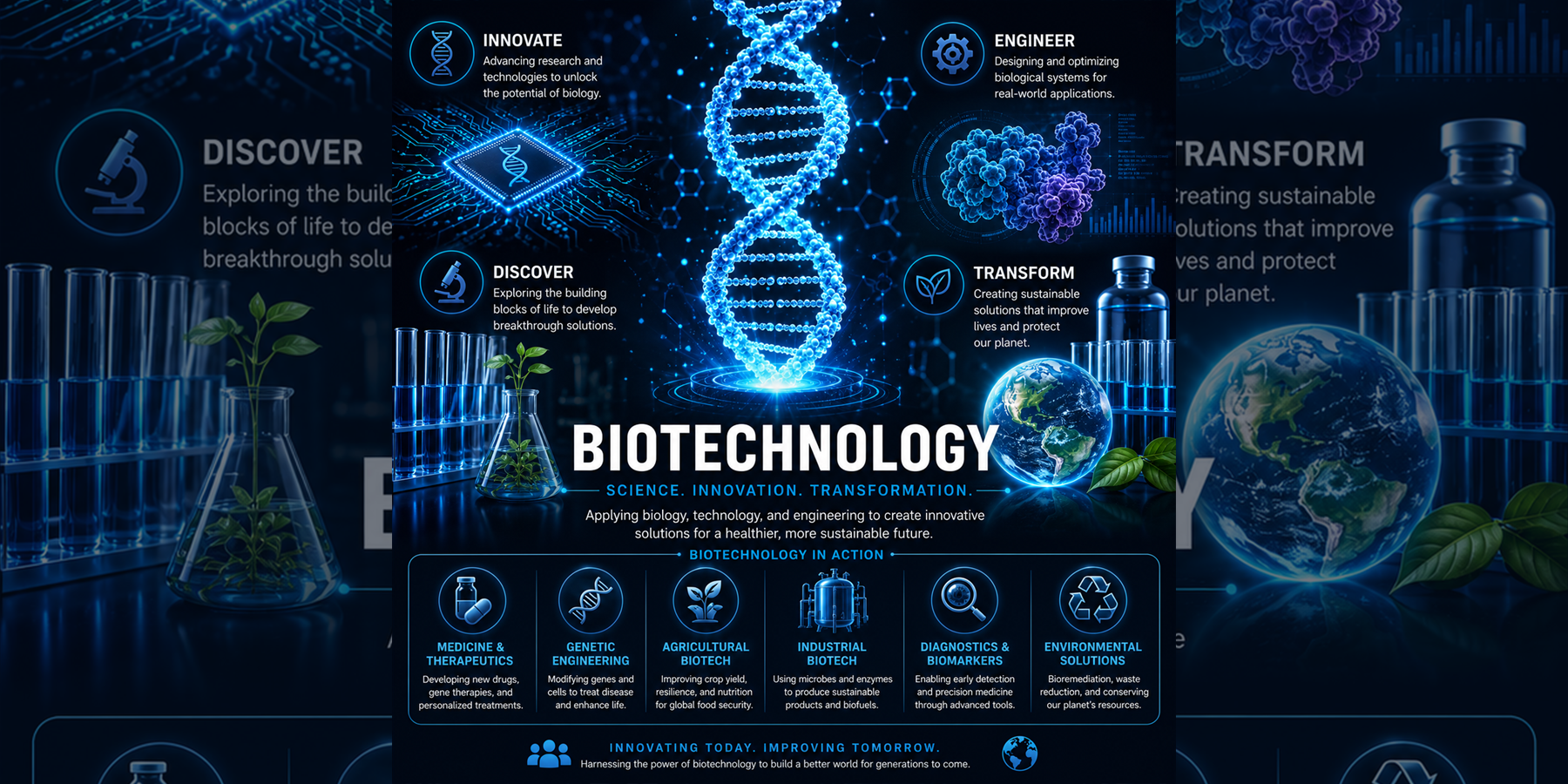
Biotechnology
Harnessing Biological Systems for Innovation & Health
Utilizing living organisms, biological systems, and molecular processes to develop technologies that improve human health, agriculture, industry, and environmental sustainability.
Abstract
Life-saving drugs, gene therapies, personalized medicine, molecular diagnostics, and advanced biologics.
GMO crops, disease resistance, yield improvement, and sustainable agricultural productivity.
Biofuels, enzymes, bioplastics, biochemical production, and cellular manufacturing systems.
Bioremediation, waste treatment, carbon capture, and biological solutions for cleaner ecosystems.
Part I & II
Biotechnology combines biological knowledge with technology to solve human problems, evolving from ancient fermentation to the genomics revolution.
Fermentation of bread, brewing of beer and wine, and selective breeding of plants and animals.
Microscopy revealed living microbial worlds and laid the foundation for modern microbiology.
The double helix clarified the molecular basis of heredity and biotechnology design.
Scientists began cutting, recombining, and expressing DNA across organisms.
Polymerase chain reaction enabled rapid amplification and analysis of genetic material.
Completion of the human genome accelerated genomics, diagnostics, and personalized medicine.
Part III
Deliberate modification of genetic material using molecular tools to alter biological function for medical, agricultural, or industrial purposes.
Engineering genes, regulatory sequences, and cellular pathways to produce desired traits or therapeutic effects.
Molecular biotechnology turns DNA, RNA, proteins, and cells into programmable biological tools.
Part IV
Advanced biological medicines and diagnostics target disease with high specificity and support patient-specific care.
Engineered proteins replace, block, or enhance biological functions in targeted disease care.
Antibodies bind precise molecular targets for cancer, autoimmune, and inflammatory diseases.
Recombinant, viral-vector, and mRNA platforms accelerate immune protection and outbreak response.
Functional gene delivery can restore missing or defective genetic functions.
Tissue-specific vectors support treatment of selected inherited retinal disorders.
Gene-based approaches can address severe monogenic disease mechanisms.
Treatment plans are guided by each patient's genetic and molecular information.
Biomarkers help identify risk, classify disease, and predict treatment response.
Drug choice and dosage can be adapted to inherited differences in metabolism and toxicity.
Part V
Stem cell technologies enable disease modeling, tissue replacement, drug testing, and patient-specific regenerative strategies.
Adult cells can be reprogrammed into pluripotent cells for research and personalized disease models.
Self-organizing 3D tissue cultures model organs and disease responses.
Stem cell-derived tissues may replace damaged myocardium, cartilage, and neural tissue.
Patient-derived cells help predict toxicity and therapeutic response before clinical use.
Part VI
Biotechnology improves crops and livestock through genetic selection, disease resistance engineering, productivity gains, and advanced reproductive technologies.
Biotechnology supports livestock health, productivity, disease resistance, and global food security through responsible genetic and reproductive technologies.
Part VII
Biological processes support manufacturing, renewable energy, waste treatment, ecosystem restoration, and circular economies.
Amylases, proteases, and cellulases enable efficient manufacturing and bioprocessing.
Microbial and plant systems can produce renewable polymers and specialty chemicals.
Controlled growth systems scale microbes, mammalian cells, and engineered organisms.
Microorganisms and plants can degrade contaminants and restore damaged ecosystems.
Biological treatment can convert waste streams into safer outputs and useful products.
Biological capture and conversion strategies support circular carbon economies.
Algae and microbes can produce renewable fuels from sunlight, carbon, and waste streams.
Engineered biological systems can generate hydrogen and other clean energy carriers.
Microbes can convert organic matter into electrical energy in specialized systems.
Part VIII
Synthetic biology applies engineering modularity to living cells, while AI accelerates biological discovery, drug design, and patient stratification.
Design, build, and test novel biological systems that behave like engineered platforms.
Artificial intelligence supports drug development, molecular design, clinical trial optimization, and biological prediction at scale.
Part IX
Biotechnology raises profound ethical questions that require careful governance, transparency, and responsible stewardship.
Society must distinguish therapeutic need from enhancement beyond medical necessity.
Biotechnology benefits should be available across communities, not only to privileged groups.
Genetic information requires strong privacy, consent, and security protections.
Released organisms, edited crops, and synthetic biology require responsible risk assessment.
Part X
Biotechnology will increasingly shape precision medicine, sustainable manufacturing, artificial organs, and living therapeutics.
Personalized therapies based on individual genomic and molecular information move medicine beyond population averages.
Base editing, prime editing, and epigenome editing offer more precise and safer genome modification.
3D bioprinting, decellularization, and stem cell organogenesis may address transplant shortages.
Programmable biological systems may sense disease and autonomously deliver targeted treatment.
AI will automate drug development, molecular design, clinical trial optimization, and patient stratification.
Biological systems can support renewable energy, environmental restoration, and circular bioeconomies.
References